SF Inspiration #6: The SF Advent Calendar 2019

SF Inspiration #6: The SF Advent Calendar 2019

SF Inspiration #6: The SF Advent Calendar 2019

Elfie Czerny & Dominik Godat


Welcome to our Solution Focused Advent Calendar 2019!

24
doors
with Solution
Focused inspirations
are waiting for you to enjoy!
Have fun in joy and ease with
our SF
advent
calendar!

Share your ideas, insights, learnings and inspirations with us in the comments section below.

A big thank you to Maelle Dietrich (photographer) and Sandra Dietrich (decoration).

SF Inspiration #5: The SF Advent Calendar 2018

SF Inspiration #5: The SF Advent Calendar 2018

SF Inspiration #5: The SF Advent Calendar 2018

Elfie Czerny & Dominik Godat


Welcome to our Solution Focused Advent Calendar 2018!

(Hier geht’s zum deutschen Adventkalender >>)

24
doors
with Solution
Focused inspirations
are waiting for you to enjoy!
Have fun in joy and ease with
our SF
advent
calendar!

Share your ideas, insights, learnings and inspirations with us in the comments section below.

A big thank you to Stacey Nelson (photographer), Victor Nelson (decoration), and Andreas Lattner (photoshop). The pic includes elements from Freepik.com by Pikisuperstar.

SF Inspiration #3: “Solution” is where the magic happens!

SF Inspiration #3: “Solution” is where the magic happens!

SF Inspiration #3: Solution is where the magic happens!

Dominik Godat & Elfie Czerny

What do we mean when we use the word solution? Isn’t that clear? No! This ordinary every day term can be used in different ways. And the way we use it in the Solution Focused approach is a special and especially rewarding one. It’s nothing less than the difference between a linear and a magical world. And this difference can make a relevant difference for your application of the Solution Focused approach in your everyday life. 


  • Elfie is asking for signs of emerging solutions! 94% 94%
  • Dominik is talking about emerging solutions! 83.5% 83.5%
  • Bibi is letting solutions emerge! 100% 100%

Solution – Looking forward in a magical world

“The meaning of a word is its use in the language.” Ludwig Wittgenstein

We were puzzled! Sometimes people came back after our Solution Focused (SF) workshops and told us that SF didn’t work. When we asked them what they did, they told us that their conversation partners couldn’t even answer their first question: “Ok, now you told me your problem. So, what’s the solution (to your problem)?”. Our first (mostly unspoken) reaction was “That’s not an SF question! How could they misunderstand the approach like that.” For quite some time, we didn’t know how this misunderstanding could happen, until someone said, “You know, I am Solution Focused now and I only focus on the solution with my conversation partners.” And it suddenly became clear that they were talking about a different meaning of the word “solution” than we were. So, our quest began.


1. What do we mean with the word “solution”?

Following Wittgenstein the meaning of a word is its use in the language. So let’s check how the word “solution” is used in our language. Compare the two following questions:

  1. What is the solution (to your problem)?
  2. What was the solution (to your problem)?

What can we discover when we look at these two questions? “Not much.”, you might say, “While number 1 is in the present tense, number 2 is in the past tense.”

If we look closer we discover very relevant differences: 

  • Looking forward (in a linear world): When answering question number 1 we are either looking for a) a desired future state that is better than it is now or b) a set of actions that when applied “solves” our problem and thus leads to our desired state. While the first idea seems to be in line with SF at first glance, the second idea – “how do we solve this?” – is a quite linear one. It assumes that we can now at this moment know the effects of our actions in the future in detail and predict what the results will be. What an overwhelming idea in a complex dynamic world with interdependencies where we can’t know exactly what effects our first steps will have.
  • Looking backwards in a magical world: In question number 2 we look backwards and want to know what happened and/or how we reached a certain state. The answer to question number 2 is c) the story of what (e.g. actions) led to what, quasi how the solution emerged. Solution here is something that emerged in real life in the past and that we can only see when we look backwards. When Machado says that “Paths are made by walking.”, in this view solutions are made by doing. And this happens somehow magical. We don’t know what the effects of our first steps will be, we adapt to change, we influence others who influence us, we do something or don’t do it, and somehow the solution emerges. When we look back, we can tell people our story of how it happened. When we look forward however we can’t yet see how this will exactly happen, especially not in our dynamic complex world.
  • Looking forward in a magical world: If we can’t tell how the future will unfold and still want to look forward in this view, we might ask “What solution might be evolving/emerging in the future?”. Solution is then d) something that might emerge in the future in a somehow magical process.

So out of these two questions we can derive at least four meanings of the word solution:

  • a.) Solution as a desired state in the future.
  • b.) Solution as a set of actions that when applied leads to our desired state.
  • c.) Solution as our story of what emerged in the past and led to our desired state.
  • d.) Solution as what might be emerging in the future in a somehow magical process.

In our example that puzzled us at the beginning, we realized that when they used the word solution they either meant a) or b), while we usually mean d).

“Paths are made by walking.” Antonio Machado


2. So, what does the word solution mean in the term Solution Focused approach?

If the word solution can be used in different ways in ordinary language, do SF practitioners at least use it coherent? Is there one meaning of the word solution in the term Solution Focused approach? This question was especially intriguing for us, since we were quite often engaged in discussions whether the term “Solution Focus” is well chosen or not. Most SF practitioners that we have met find the term somehow odd, while we like it very much. So, also amongst practitioners there might be different understandings. Therefore, let’s check how the word solution is used in the Solution Focused approach.

If we look at texts of Steve de Shazer and Insoo Kim Berg we can find all four and even more different meanings. Let’s look for example at the groundbreaking article de Shazer et al. (1986) “Brief Therapy: Focused Solution Development”. There the word solution is used 55 times and in many different ways. And it’s mostly not clear what they really meant with it. Here are some examples:

a.) Solution as a desired state in the future:

  • The more alternate futures or alternate solutions are talked about, the stronger the client’s expectations of change will be.”
  • “The task of Brief Therapy is to help clients do something different, by changing their interactive behavior and/or their interpretation of behavior and situations so that a solution (a resolution of their complaint) can be achieved.

b.) Solution as a set of actions that lead to our desired state: 

  • Solutions are the behavioral and/or perceptual changes that the therapist and client construct to alter the difficulty, the ineffective way of overcoming the difficulty, and/or are the construction of an acceptable, alternative perspective that enables the client to experience the complaint situation differently.”

c.) Solution as what emerged in the past and led to a desired state.

  • “Attempts to build an intervention (…) might not as readily have led toward the eventual solution, which the family itself invented between the first and second sessions.

d.) Solution as what might be emerging in the future in a somehow magical process:

  • the solution (that is, change in interaction) needs to “fit” within the constraints of that situation in such a way as to allow a solution to develop.


If the word solution was not used in a coherent way back then, did it become more clear in later years? If you study the articles and books of Steve de Shazer and Insoo Kim Berg, you will notice that it didn’t.

The study of texts will not help us to clarify what could be meant with solution in the term Solution Focused approach, looking at practice however could. So, let’s look deductively at the relationship between the above meanings and Solution Focused practice: How do the above four meanings fit to SF practice? If we do that, it becomes obvious that with solution in the term Solution Focus only d) “Solution as what might emerge in the future in a somehow magical process.” can really be meant. 

  • a.) “Solution as a desired state in the future” cannot be meant with Solution Focus. On the one hand because most practitioners have other words for that desired state, e.g. preferred future. That would not be necessary, if solution was the word for this desired state. And on the other hand because most SF practitioners focus on more than this desired state, e.g. signs of progress and what worked in the past. If solution was the word for the desired state, then the term Solution Focus would only cover a part of what SF practitioners are doing.
  • b.) “Solution as a set of actions that lead to our desired state” can also not be meant. Otherwise the focus on small next steps or signs of progress would not make sense. The practitioner would need to engage in how exactly these actions lead to the preferred future. Most SF pracitioners would reject this linear idea.
  • c.) “Solution as what emerged in the past and led to our desired state.” could only be meant after the client reached the desired future and not before or during the session, so that can also not be meant with the term Solution Focus.

Only d makes sense: If “Solution is what might be emerging in the future in a somehow magical process.” then the term Solution Focus means that we focus on aspects that foster the emergence of useful change in the future, like

  • a detailed picture of the (interactions in the) preferred future. As soon as I see how I could behave and how others might react in my desired future in detail, I can start to behave like that and/or might notice instances of this happening much better and thus can react to those instances in a fruitful way in the future, so that useful change can emerge.
  • signs of progress. When I see how it might look like when the solution starts emerging, I might notice those changes, be able to amplify them, and foster useful change in the future much easier.
  • what worked in the past.  When I see what worked in the past, I can try out if this fits this new situation. On the one hand, I know that I was already able to do this and might be able to do it again. And on the other hand, if it worked in the past it might be encouraging to do more of it.

All these aspects foster the emergence of useful change, and thus the emergence of a solution, in the future. We cannot say what will exactly happen in our dynamic and complex world. The research however shows that Solution Focused conversations foster the emergence of useful change very much. Therefore, let’s look forward in a magical world – Solution (Focus) is where the magic happens!




Three questions to foster a detailed picture of the preferred future:
  • What are your best hopes from coming here?
  • Who could notice that you reached you best hopes? How could they notice? How might they react? And how might you react in response?
  • What other differences could reaching your best hopes make?
Three questions to explore signs of progress:
  • Suppose your best hopes are fulfilled tomorrow: How would you start noticing?
  • What could be first small signs that show you that your are on your way to your best hopes?
  • Who else could notice those small signs? And how? How would the person react? How would you react in reponse?
Three questions to find out what works and do more of it:
  • What has worked in similar situations before? Make a list of 25 things you did back then.
  • What were signs that showed you in your recent past that you are on your way to reach your best hopes?
  • Suppose that you moved one step closer to your best hopes: What would you notice yourself doing of the things that you are already doing now?


SF Inspiration #2: The SF Advent Calendar 2017

SF Inspiration #2: The SF Advent Calendar 2017

SF Inspiration #2: The SF Advent Calendar

Elfie Czerny & Dominik Godat


Welcome to our SF Advent Calendar!

(Hier geht’s zum deutschen Adventkalender…)

24
doors
with Solution
Focused inspiratons
are waiting for you to enjoy!
Have fun in joy and ease with our
SF ad
vent cal
endar!

Share your ideas, insights, and learnings in the comments section below and win one of three postcard coachings.

<iframe src="https://www.facebook.com/plugins/video.php?href=https%3A%2F%2Fwww.facebook.com%2Fsolutionfocusontour%2Fvideos%2F163244084281776%2F&show_text=0&width=560" width="560" height="315" style="border:none;overflow:hidden" scrolling="no" frameborder="0" allowTransparency="true" allowFullScreen="true"></iframe>
SF Inspiration #1: Change is happening all the time!

SF Inspiration #1: Change is happening all the time!

SF Inspiration #1: Change is happening all the time – Discover the signs!

Dominik Godat & Elfie Czerny

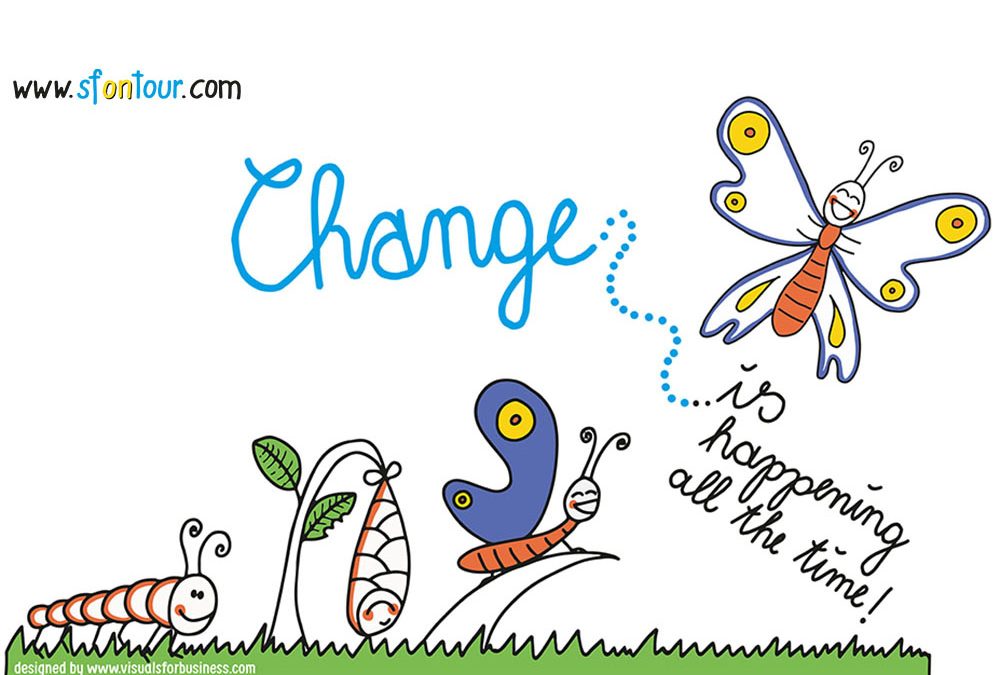
Change is happpening all the time. A statement that is widely accepted nowadays in our fast changing world. Yet, do we really understand what it means for our everyday life? Do we see the potential this view offers? Hardly. Then if change is happening all the time, stability is an illusion or at least an exception. Most concepts used however are still based on the idea of stability. Or did you know that if you believe that change is happening all the time neither the classical problem solving method nor the saying that “people cannot change” does make sense? And the idea of people “having” a personality, character or any other inner structure are highly questionable. Your perspective on change makes a difference – discover the signs.

  • Elfie is loving it! 99.9% 99.9%
  • Dominik is further exploring it! 87.5% 87.5%
  • Bibi is just living it! 100% 100%

Change – two contrasting ideas with a huge impact!

“No man ever steps in the same river twice, for it’s not the same river and he’s not the same man.”

Heraclitus

1. Change is the rule – Stability the exception!

Already Heraclitus embraced the idea of change happening all the time. In this view everything is changing, nothing is constant. The water in the river and thus the river is different every second. Change is the rule and stability an illusion or at least an extreme exception. In this view you don’t have to do something to change, because change is happening anyway. At best you can influence change in a certain direction.

  • If you look at a toddler, for example, you see this very well. Bibiana, our daughter, grows every day. She learns constantly. On one day, she eats salad, on the next day, she doesn’t. As soon as we as parents have the idea that we now figured out how it works, she is behaving differently. Change is obviously happening all the time.
  • If you look at yourself, you will notice that no day looks exactly the same. You will notice that during the day, you feel different, e.g. you become hungry or feel happy or angry. You meet people that inspire you. Your surroundings change, your relationships change, etc. Did you know that your body is constantly replacing old cells with new ones at the rate of millions per second. By the time you finish reading this sentence, 50 million of your cells will have been replaced by others. You are physically another person now.

Wherever you look, you can see this. Most changes are very small though and only noticable when you look closely. Look around in the room you are in at the moment: How many things, e.g., do you discover that are laying at a different spot than yesterday evening? Or how much change do you notice that is happening at this second, e.g. people walking around, emails popping in at your inbox, thoughts coming and going, new ideas emerging, cars driving by, solutions arising…?

%

Change

%

Stability

“Uttering a word is like striking a note on the keyboard of the imagination.” Ludwig Wittgenstein

2. The idea of stability is a persistent one!

“We already know that!” might some of you say. “What’s the big deal?” Here it comes: Even though the above view has become more popular in the last few years, there is still this very persistent and contrary idea that stability is the norm and change is the exception. Consider, e.g., the classical problem solving method: How many times have you tried to analyze a past problem as if everything was still the same? Or how often have you heard yourself say that “things are like they are.” Or think on concepts of personality or character: How many times have you been told that you “have” your personality or your character, and that it cannot be changed that easily?

Concepts who favor stabilty as the norm, like most change management concepts, are very change hostile. They tend to see change as something

  • that is difficult to achieve and 
  • that is rather done than is happening.

Often even so, that the idea is promoted of people having to do something “forcefully” to change this stable situation. Like Wittgenstein said, “uttering a word is like striking a note on the keyboard of the imagination.” The use of the word “stability” in our language is often connected to the physical picture of stability: How can you change a stable rock? You have to use force and (at least partly) destroy it. 

Even tough most people will admit that the world around them is changing fast, most of us still use concepts of a former world where stability seemed to be much more present. 

“So what?” you might ask. Is this difference really relevant? Yes, very much so. This fundamental philosophical question has dramatic effects on our everyday life.

“Change is happening all the time; our role is to identify useful change and amplify it.” 

Gregory Bateson

3. Look out for signs of progress instead of analyzing “stable” states!

This difference of perspectives can make a big difference, for you and your surroundings.

Don’t analyze “the” problem: If you believe in change as something that is happening all the time then the classical problem solving method does not make sense anymore. The main assumptions of this method are (1) that there “is” a situation/a problem that can be analyzed that stays the same during the analysis, (2) that there is a root cause that led to this situation, and (3) that you can apply the changes on the same situation. This method makes sense if you want to fix a trivial machine where causes and effects are always the same. In an ever changing world it’s a very strange idea, since there is 

  • (1) no situation that stays the same. As soon as we start analyzing it, it’s already a different situation. It’s much like analyzing a cloud. As soon as we start to describe it, it’s already looking different. This difference gets even bigger as time passes by. 
  • (2) no stable root cause that leads to situations. In a complex world a multitude of interplaying influences that also change all the time are much more realistic.
  • (3) thus a very high probability that your ideas of how to “fix” the (past) situation, don’t fit the actual changed situation.

Look for signs of progress instead: The more you embrace that change is normal, the easier it is to live a life in ease. If you feel stuck, it’s a hopeful perspective to know that things will change again and to look out for signs of what’s wanted. If change is happening all the time, your wished for change might already (at least partly) have happened in the past or might happen in the near future. So look out! People who tend to see stability as the norm mostly miss these tiny signs of progress. The more you look out for useful changes that happen all the time, the more you will find them and the easier you can amplify them.

Let’s make a little experiment and explore the potential of signs of progress:

  1. Think of something that you would like to have different in your life.
  2. What exactly would be different then? How would you notice that you have reached your preferred future? (Name at least 25 signs of progress)
  3. When did you already experience these 25 signs of progress – partly or fully – in your life? What was useful then?
  4. What could be small signs of progress in the near future, e.g. tonight or tomorrow, that show you that you are already on your way to your preferred future? (Name at least 10)

After this experience:

  • What is the potential of this view on change for you?
  • What differences did you experience between this quest for signs of progress and the typical problem solving questions, like “What is your problem?”, “Why is it how it is?”, “Who is responsible?”, etc.?
  • How could this change in perspectives enhance your life even more?
  • What potential do you see in this view?

Imagine the differences this shift in perspectives could make!


What seems to be a small change could make a big difference in the world:

  • Imagine a world where we would all talk more about signs of progress that show us that we are moving in a wished for direction instead of lamenting the past. What differences could that make for all of us? What differences could that make for your family when you talk about how you could notice tonight that you all had a great day? What difference could it make for you to think of signs that could show you that you are moving in the right direction? And how probable is it, that once you identified them, you will see them happening more in the future?
  • Imagine a world where we would all look for signs of the recent past that encourage us that we can do steps in the wished for direction instead of lamenting what doesn’t work. Wow, how would our newspapers then look? What difference could that make for our company when we talk more about what worked and how we could use that in the future? What difference could that make for our projects if we learned to amplify what worked?

What differences do you think could this shift in perspective make? We are curious to hear from you!

Thank you for joining – www.sfontour.com – the journey to a life in ease and joy! Together we amplify useful changes in the world!

Herzlich

Dominik & Elfie

SF Inspiration #2 is soon to come – register for our newsletter to get the news!

Pin It on Pinterest

Share This