SF Inspiration #16: How We Create Conflicts In Everyday Life

SF Inspiration #16: How We Create Conflicts In Everyday Life


SF Inspiration #16: How We Create Conflicts In Everyday Life

Dominik Godat & Elfie J. Czerny
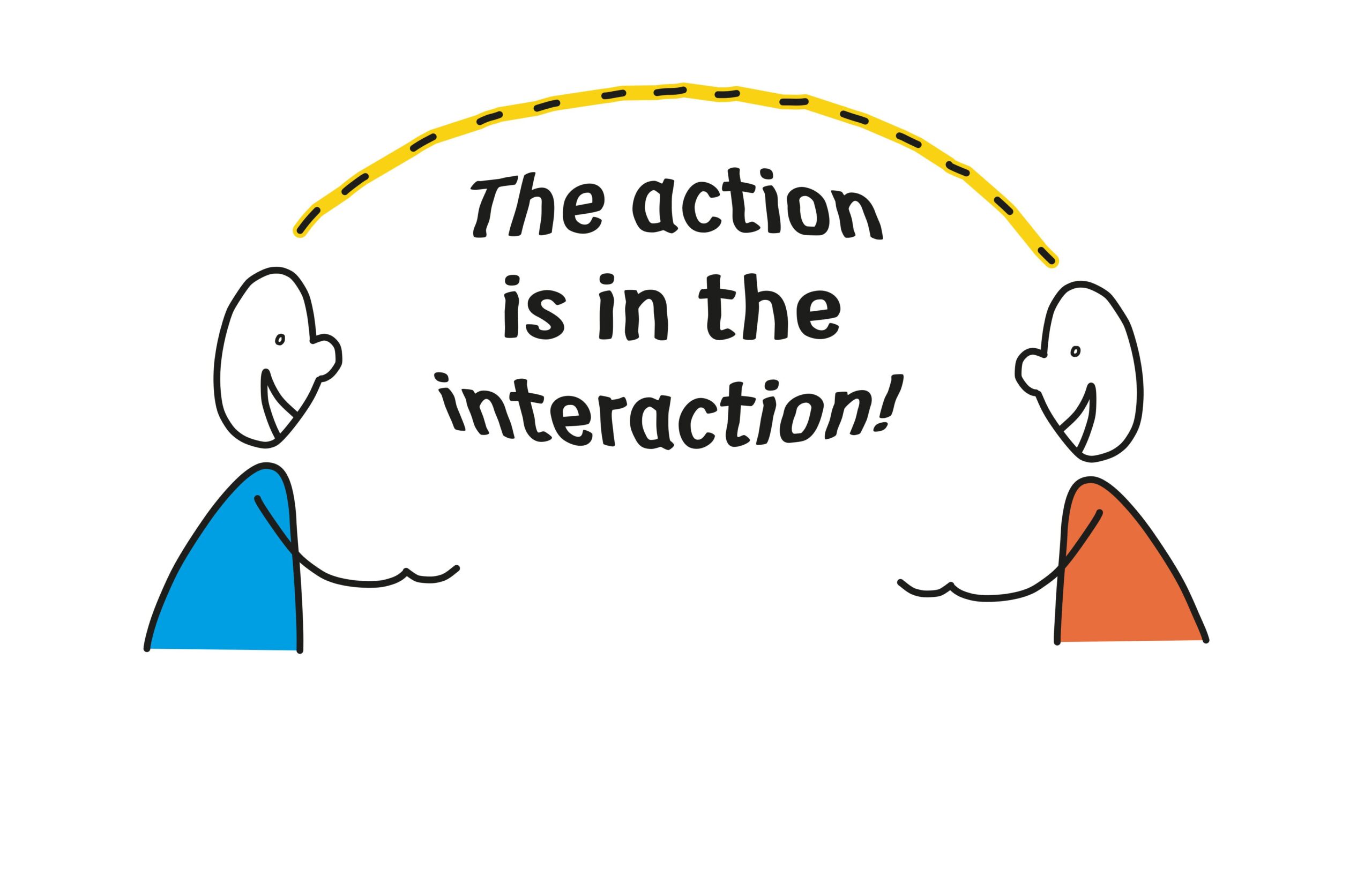
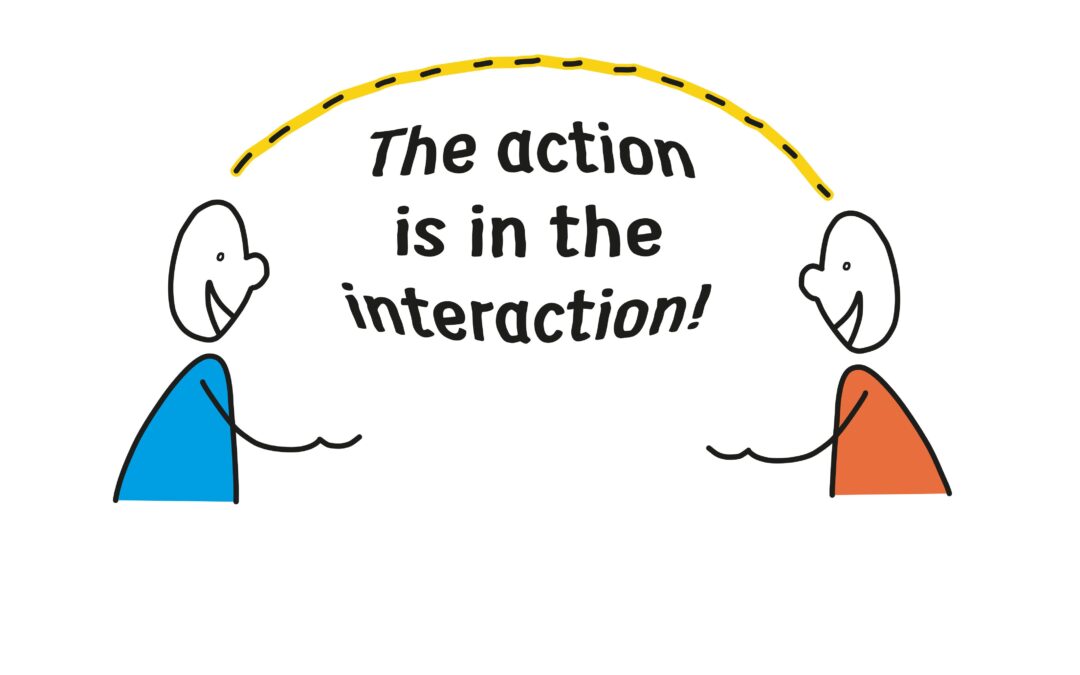
“How We Create Conflicts in Everyday Life” – two stick figures showing that “the action is in the interaction,” a key idea in understanding everyday communication.

How We Create Conflicts In Everyday Life

This article first appeared in June 2022 in our monthly magazine Persönlichkeit – Schritt für Schritt entwickeln und entfalten, published by WEKA Business Media AG, under the title “Wie wir Konflikte im Alltag erschaffen”.

How do conflicts arise? While many approaches explore conflicts as seemingly objective events, we argue that conflicts in everyday life are predominantly created through the way we use language. A harmless interaction can quickly turn into a tangible conflict through attribution, generalisation, reinterpretation, reification, and decoupling.

Conflicts seem ever-present. Over the past years, we’ve seen clashes on individual and societal levels—particularly during the Corona pandemic. The news is filled with reports of violence and war. Disagreements erupt in families, schools, and workplaces. Since February 2022, the Russian invasion of Ukraine has dominated public discourse. Clearly, conflicts are part of our reality. Or… aren’t they?

You might ask: “What kind of question is that? Of course, conflicts exist!” Yes—at first glance, that’s undeniable. Armed conflicts continue to occur around the world. And we regularly witness challenging moments in which people argue, express differing views, exclude one another, or even fight.

Different views

Many frameworks aim to explain how conflicts arise. Most focus on what appear to be objective conditions—on what is assumed to “actually” happen. These approaches describe, for instance, that “Conflicts emerge when incompatible goals, interests, needs, or values collide.” Some claim that “Conflict is a permanent feature of human interaction.” Today, this is a widely accepted view of conflict. And when we adopt this view, conflict indeed seems to be everywhere.

But what happens when we examine how we use the word “conflict” in everyday language? Things become less clear-cut. Standard definitions often assume that it is the objective nature of a situation (for example, two people disagreeing) that determines whether we call something a conflict. But there’s a compelling alternative: what matters far more is how we describe and label what is happening.

Conflicts in everyday life are primarily created through language – by labeling what happens as a conflict.

Conflicts are created through our language

A few years ago, we contributed a chapter to a book on conflict management. In writing it, something struck us: conflicts in everyday life are often not observed but produced—through language. While we saw moments in which two people expressed different views, others described those very moments as conflicts.

Thus, we have a choice in how we describe a situation:

  1. Describing interaction or behaviour:
    “I said something, and my colleague expressed a different view.”
    This describes what each person actually said or did, in the order it happened.
  2. Generalising:
    “My colleague disagreed.”
    → This shifts to a more abstract description that no longer reflects the actual sequence, but still stays close to what happened.
  3. Dramatising:
    “My colleague always disagrees.”
    → This turns a one-time or repeated behaviour into a more exaggerated version.
  4. Attributing traits:
    “My colleague is stubborn.”
    This no longer refers to specific behaviour or interaction but assigns a personal characteristic to one of the individuals.
  5. Reinterpreting:
    “We had a fight.”
    This uses a term that doesn’t describe the actual interaction but rather interprets or evaluates the situation in a particular way.
  6. Reifying:
    “We had a dispute.” or We have a conflict.”
     This replaces verbs with nouns, linguistically transforming behaviour over time into a “thing” such as a conflict or dispute.
  7. Decoupling:
    “There is a conflict.”
    → This further detaches the linguistically created “thing” from both the people and their actions, making it appear as something that exists independently.

How to talk conflicts into being

While there is no conflict in descriptions 1 through 5, it is in steps 6 and 7 that a conflict is created. The situation itself remains unchanged—but the description is entirely different. What may seem like a subtle shift has far-reaching consequences. Depending on how a situation is described, entirely different lines of thinking and courses of action become relevant:

  1. At Step 1, the person might think about how to phrase things in the next conversation so that their colleague is more likely to agree.
  2. At Step 2, they might consider how to persuade their colleague in this specific case.
  3. At Step 3, a one-time solution no longer seems sufficient. They may feel the need to get to the bottom of why their colleague always disagrees.
  4. At Step 4, they might begin thinking about how to change their colleague.
  5. At Step 5, they may start developing strategies for reconciliation.
  6. From step 6 onward, things become noticeably more difficult. Now they “have” a conflict or a dispute. Simply changing behaviour no longer seems enough. They will likely start thinking about how to resolve the “dispute” or settle the “conflict.”
  7. At Step 7, the situation seems only marginally related to either person. Now, what’s needed are “solutions” to address “the conflict.”

The very same situation can become a different reality—simply through a change in wording. In everyday life, we quite literally create our conflicts through the way we talk about situations. The wording we choose doesn’t just shape how we—and others—experience the reality we construct through language. It also influences how easily and quickly, or how slowly and painfully, a situation seems likely to improve.

If you want to experience fewer conflicts, stay with describing the interaction itself—or the specific behaviours that took place.

In fact, the same event, differently worded, creates a different reality. In everyday life, we literally create conflicts through the way we speak about situations. Our choice of wording doesn’t just shape how we and others perceive reality—it also influences how easily or how arduously change seems possible.

So, if you want to experience fewer conflicts, stay with describing the interaction itself—what people actually do and say together.

Further training on the topic

Join our Microanalysis online course and get to know what really happens in dialogue:

The Authors

Elfie J. Czerny and Dominik Godat are communication and leadership experts, Interactionalists, and passionate advocates of solution-focused practices.

They are co-editors of the magazine Persönlichkeit! and co-founders of SF on Tour. Together, they lead the expert leadership course Fachkurs für Lösungsfokussierte Führung (Expert Course Solution-Focused Leadership) as well as the Certificate of Advanced Studies course CAS Lösungsfokus in Organisationen (Solution-Focus in Organisations) at the Lucerne University of Applied Sciences and Arts.

👉 Learn more: www.hslu.ch/loesungsfokus
SF Inspiration #15 Moving Forward Together In Dialogue

SF Inspiration #15 Moving Forward Together In Dialogue


SF Inspiration #15: Moving Forward Together In Dialogue

Elfie J. Czerny & Dominik Godat

Elfie Czerny & Bibiana Moving Forward Together in Dialog

Moving Forward Together in Dialoge

The article “Moving Forward Together in Dialogue” first appeared in May 2024 in our monthly magazine Persönlichkeit – Schritt für Schritt entwickeln und entfalten, published by WEKA Business Media AG, under the title “Im Dialog gemeinsam in Bewegung.”

In face-to-face conversations, we do far more than previously assumed. We are in constant motion together—moment by moment, millisecond by millisecond. Join us in exploring how you can begin to perceive this shared movement in dialogue.

Focus on the Individual

We are trained to observe what each individual does. When we look at conversations this way, we see alternating monologues. One person speaks, the other listens. Then the second person speaks. It appears as though the speaker and the listener are acting independently. From this, we try to draw conclusions about good communication—based on the formula: 1 + 1 = 2 [1].

Dialogue as Alternating Monologue

Imagine you’re in a conversation with a colleague who is assigning a task to you. The goal is for you to understand the assignment well so that you can carry it out effectively. If we observe your colleague (the speaker) and you (the listener) as separate individuals, we are likely to conclude that your colleague independently selects the statements that best convey what she wants to communicate. She then sends these statements to you, the receiver. Your role as the listener is simply to correctly decode her intended message. From this perspective, your colleague speaks as though she were writing to a distant reader [2].

Focus on Interaction

When we shift our focus to what people do together—to their interactions—we begin to notice how much more dynamic dialogue really is. From an interactional viewpoint, conversations are no longer individual performances for an audience. They become coordinated activities—more like a jazz duet than a solo recital.

Referential Communication

Referential communication brings this joint activity into focus. When we talk with one another, we are constantly referencing each other. A successful exchange of information depends not only on the quality of the speaker’s statements but also on the participants’ ability to coordinate and refer to one another effectively.

In the 1980s, American psycholinguist and Stanford professor Herbert Clark, along with colleagues [2] [3], investigated whether conversations are unilateral actions governed by a single speaker—or whether they might, in fact, be collaborative processes shaped by both speaker and listener. Their research convincingly demonstrated that what matters is not one-sided transmission, but dialogue itself. We continually respond to one another—and we do so in ways uniquely co-created with our respective conversation partners [4].

Dialogue as a Joint Process

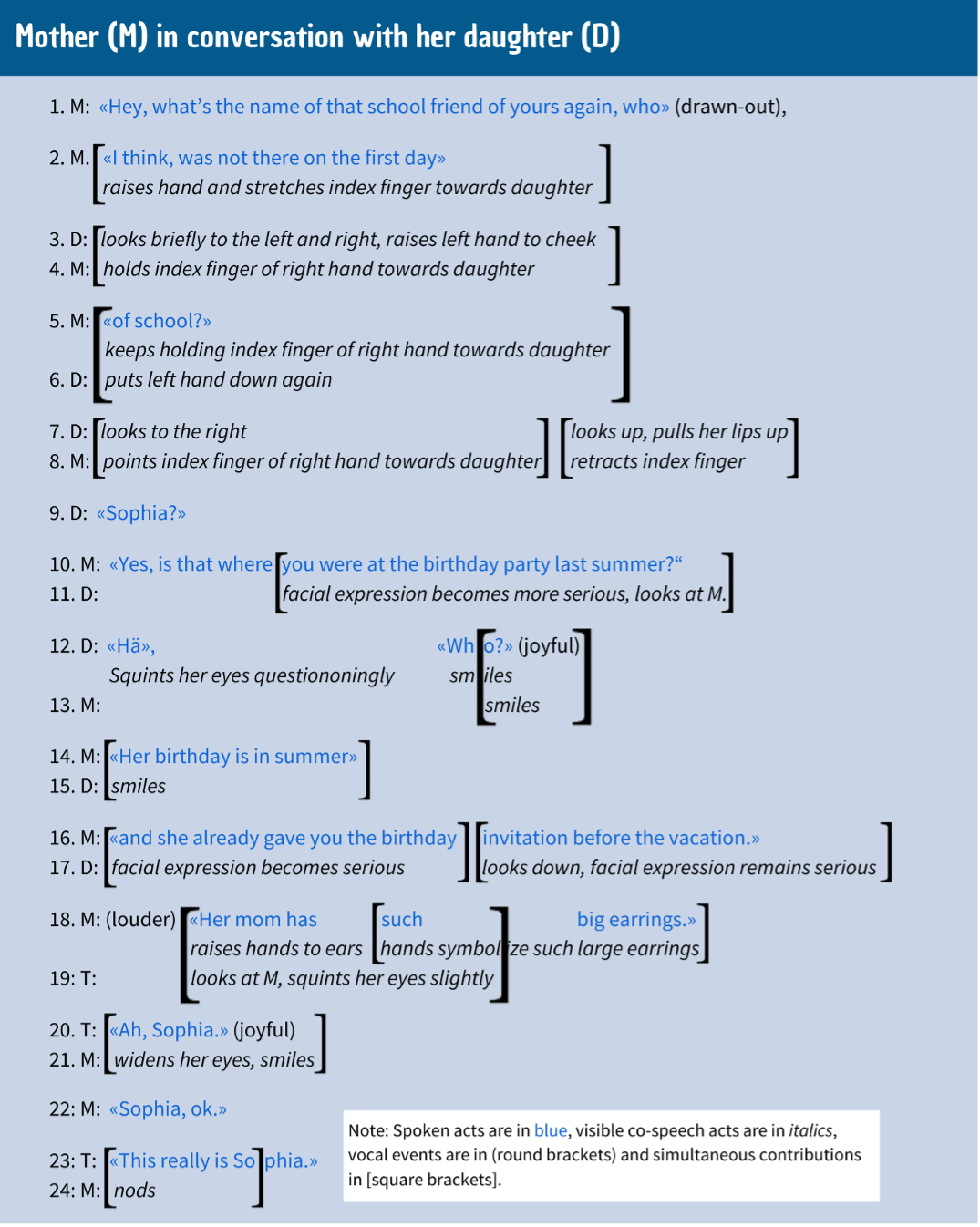
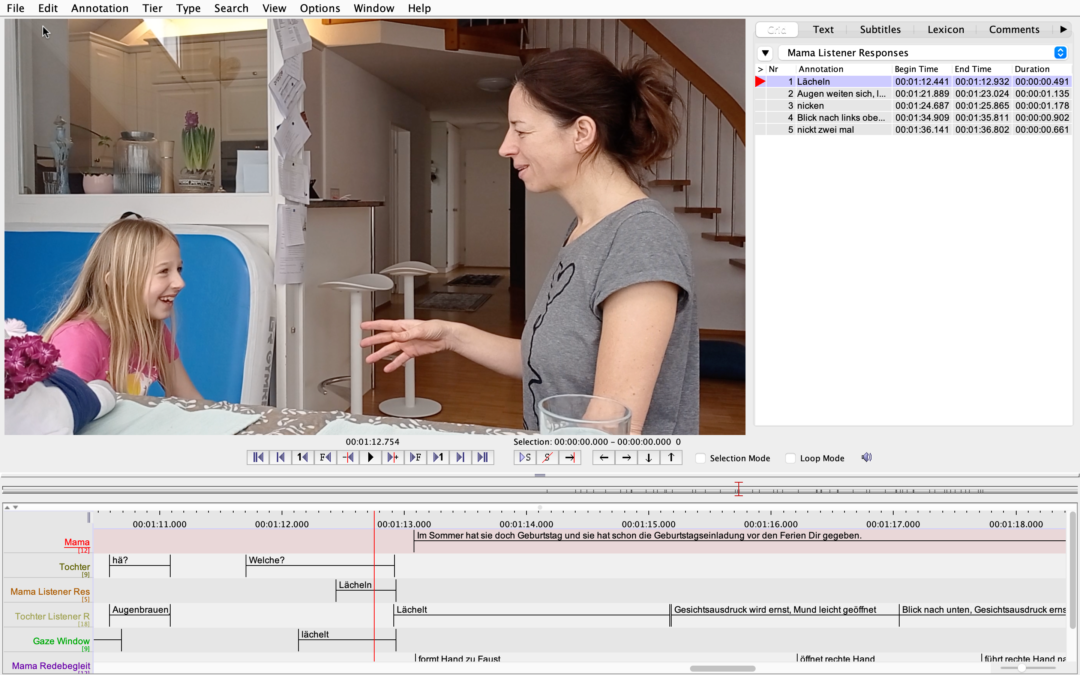
Recently, we were having lunch with our daughter. She was telling us about school, and I asked her about a classmate whose name I couldn’t recall. In the excerpt below, you’ll see how she and I co-constructed the name of her schoolmate together—in about 30 seconds.

This brief example shows how quickly and efficiently we coordinate in conversation, working together moment by moment to reach a shared understanding.

Transcript of Moving Forward Together In Dialogue

After our daughter asked, “Who?” (line 12), I continued in line 14, “Her birthday is in summer.” She smiled. I added, “And she already gave you the birthday—” and then “invitation before the vacation.” As I began saying “and,” she stopped smiling and her facial expression turned serious.
I continued with “invitation,” and she looked down with a serious face. Her behavior signaled that we hadn’t reached shared understanding yet.

I then added, “Her mom has such big earrings.” My words were accompanied by a gesture—I raised my hands to my ears and pointed to them at “so big” to represent the earrings. As I began speaking, our daughter’s eyes turned toward me and she squinted slightly. Immediately after I finished, she said joyfully, “Ah, Sophia,” just as I widened my eyes and smiled.

 You could read this transcript as if it were composed of alternating monologues—but that would be a misreading. Our contributions overlapped frequently, yet we stayed closely coordinated. Many of our contributions—especially shifts in facial expression—occurred simultaneously. We co-created the dialogue, second by second. And yet, this dynamic is difficult to capture in a transcript.

Movement in Conversation

The degree to which we move together in conversation is difficult to notice in real time. Dialogue partners build and shape their conversation collaboratively, through actions that occur in seconds or even fractions of a second, in the ever-flowing stream of interaction.

This perspective has significantly changed how we think and act. For example:

  • We talk differently about conversations: “You said…” becomes “We talked about…”
  • We pause with intention: In our conversations, we often pause briefly and continue only once we’ve received a signal—like a nod, a “m-hm,” or a “yes”—that we are moving forward in the conversation together.
  • We turn our attention toward the other person: The more attentive and attuned we are in conversation, the more effectively we can create shared understanding.

What might this perspective open up for you?

  • What difference might this perspective make in your conversations?
  • And how might it change the way you talk about what you do when you’re in dialogue?

Further training on the topic

Join our Microanalysis online course and get to know what really happens in dialogue:

[1] Bavelas, Janet B. (2022). Face-to-Face Dialogue. Theory, Research, and Applications. (p. 71) New York: Oxford University Press. 
[2] Clark, Herbert H. & Wilkes-Gibbs, Deanna (1986). Referring as a collaborative process. Cognition, 22(1), 1-39.
[3] Schober, Michael F. & Clark, Herbert H. (1989). Asking questions and influencing answers. In Judith M. Tanur (Ed.) Questions about questions: Inquiries into the cognitive bases of surveys (pp. 15-48). New York, NY: Russell Sage.
[4] Bavelas, Janet B. (2022). Face-to-Face Dialogue. Theory, Research, and Applications. (p. 73-75) New York: Oxford University Press.

The Authors

Elfie Czerny and Dominik Godat are communication and leadership experts, Interactionalists, and passionate advocates of solution-focused practices.

They are co-editors of the magazine Persönlichkeit! and co-founders of SF on Tour. Together, they lead the expert leadership course Fachkurs für Lösungsfokussierte Führung at the Lucerne University of Applied Sciences and Arts.

👉 Learn more: www.hslu.ch/loesungsfokus 
SF Inspiration #13: Brilliant Listening

SF Inspiration #13: Brilliant Listening


SF Inspiration #13: Brilliant Listening

by Elfie J. Czerny & Dominik Godat

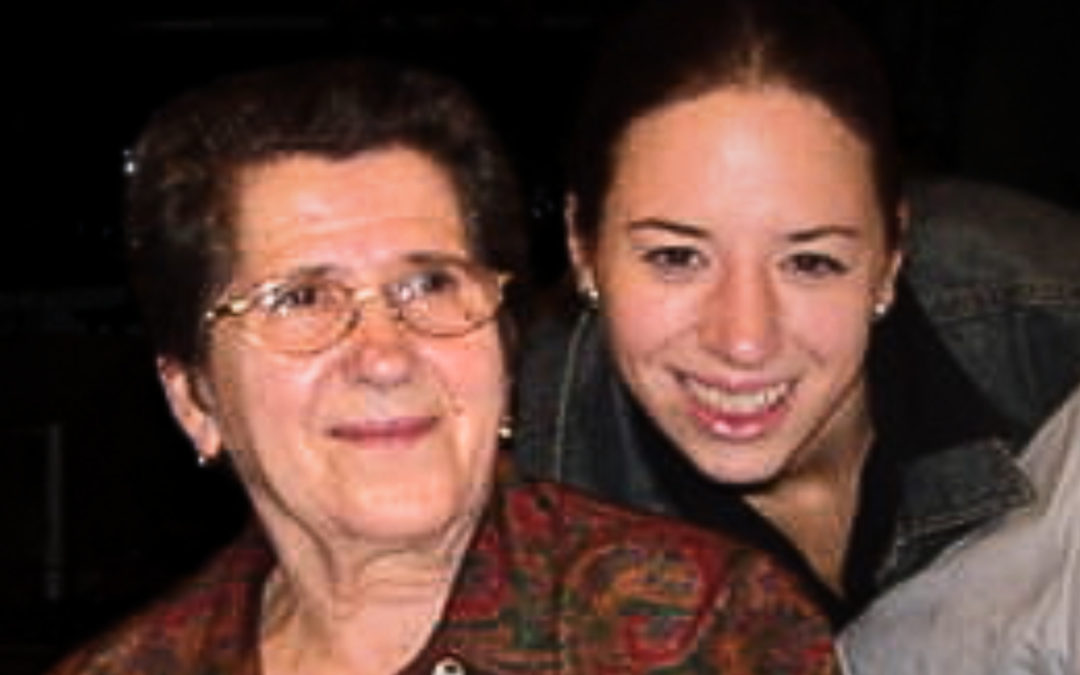
Picture of grandmother and granddaughter

Brilliant Listening

This article “Brilliant Listening” first appeared in our monthly magazine Persönlichkeit – Schritt für Schritt entwickeln und entfalten, by WEKA Business Media AG. Special thanks to Heather Fiske for her support in editing the English version.

Imagine being in a conversation where you know the person you’re speaking with is listening with full attention to your brilliance. What difference could this make? And how does Brilliant Listening work—how do we truly listen to another person’s brilliance?

Her warm brown eyes are fixed on her five-year-old granddaughter, who is excitedly recounting what she experienced while playing in the forest. She listens attentively. Then she laughs and says in a voice that sounds as if she were also proudly saying it to herself, “I see the rascal looking out of your eyes.” The mischievous twinkle in the eyes of the little girl, who in her liveliness always seems to be up to something, flashes even more.

Forty years later, her granddaughter watches for that twinkle in her 90-year-old grandmother’s eyes as she listens to her stories. Grandma also has that mischievous look, and when it flashes, the granddaughter rejoices, just as she did when she was five. Now she calls out joyfully, “There it is!” and a lively smile is drawn on the faces of both. The grandmother’s progressive dementia changes many things. However, the two celebrate these special moments of closeness with a deep look into each other’s eyes and a loving smile until the last day they spend together. 

The shine of brilliance

When the granddaughter looks back on those moments today, she knows that it wasn’t just the look in the eyes that so connected her grandma and her. It was seeing each other’s brilliance, that glimpse of something that was important to both of them. Discovering these moments in their conversations, addressing them and thus reinforcing them, they both understood. The sparkle in the eyes of one, amplified the sparkle in the eyes of the other and resulted in shared joy.

The word brilliance is derived from the French “briller” – to shine, radiate, sparkle, glow. When a person feels good all around, we can perceive this shine and radiance very clearly and distinctly.

Brilliance shows itself in many facets. We can

  • see brilliance: e.g., in the radiance and sparkle of the eyes, in relaxed facial muscles, in a broad smile on the lips, or in a soft, peaceful gaze.
  • hear brilliance: e.g. in the tone of voice, the melody of speech, the power or clarity of the voice.
  • feel brilliance: e.g., in moments when pleasant goose bumps run down our spines while the other person is talking.

Perceiving and enhancing brilliance

  • How do you notice when brilliance emerges in a conversation with someone?
  • How do you respond when moments of brilliance arise during your interactions with others?
  • In what situations do you find that brilliance is most likely to emerge in a conversation? What actions do you take in those moments to encourage or amplify that brilliance?

People who see the brilliance of their counterparts can reinforce it not only by addressing it, but also by listening to it. In the book Momo [1], Michael Ende writes about a little girl who could listen in such a way “that stupid people suddenly had very clever thoughts. Not because she said or asked something that gave the other person such thoughts, no, she just sat there and listened, with all her attention and sympathy.”

Listening as an active activity

Listening is often understood as passive. However, microanalysis of face-to-face dialogue, which uses video analysis to explore what happens in conversations moment by moment, shows how much we do when we listen:

  • We acknowledge what is being said. We do this in many ways: We nod; We blink our eyes; We smile.; We say “Mhmm”; We look the other person in the eye; We say “okay”; We reinforce with “yes, exactly” or “ah, yes”.
  • If something is unclear, we may frown. We widen our eyes. We keep our eyes open without blinking. We tilt our heads. We raise our fingers.
  • When we are astonished, we may open our mouths and keep our eyes wide open. We may acknowledge with “Wow”.

Attentive listening enables better storytelling

In an experiment, Janet Bavelas, Linda Coates, and Trudy Johnson [2] divided storytellers into two groups. One group was listened to attentively in a face-to-face conversation. For the second group of storytellers, the listeners had to count words that start with the letter “t”. The stories told were recorded on video. The recordings were then shown to an audience, which had to judge who was the better storyteller.

The results are not surprising: when storytellers were listened to attentively, with normal listening reactions, they were encouraged to continue their story. In contrast, distracted listeners displayed their listening less or reacted too late to what the storytellers were saying. Their responses were not timed well with the story. As a result, the storytellers tended to repeat themselves, pause more frequently, or become less fluent. Those who were not listened to attentively were subsequently rated as significantly less effective storytellers.

As listeners, we help shape the story. The quality of storytelling is directly related to our attentive listening. If you want to hear better stories, listen carefully! 

Brilliant with helpful assumptions

In addition to the level of your attention, what you listen for can also enhance or dim the shine and brilliance of those around you. If you want to enhance brilliance, the following assumptions may be helpful:

  • Each person is an expert on her or his own life.
  • Every human experience is unique.

With your attentive listening, you signal to your counterpart “you are important”. If you also appreciate that everyone has different life experiences and has developed unique life and coping strategies, and see the person you are talking to as an expert on their life, you will reinforce brilliance.

Instead of sharing your own ideas, pay attention and be present. You don’t have to prepare your next argument while your counterpart is speaking, and you don’t have to respond as cleverly as possible to what is being said. Instead of meeting your interlocutor in a knowing and judgmental way, you can marvel at all they have achieved and accomplished.

This stance changes your listener responses. You may show that you are touched, excited, fascinated with a smile, “Wow”, “Ahhh” or nod. You may react with a sparkle in your eye when you realize that important insights are emerging. At best, you will return the gleam in your interlocutors’ eyes with an encouraging smile. These kinds of responses invite your counterparts to share even more of what strengthens them.

Brilliant memories

The granddaughter still hears the sound of her grandmother’s voice. The granddaughter is me. And when I think of my grandmother, a warm feeling of gratitude floods my body. From her, I learned to seize moments to notice and consciously respond to the sparkle, and shine of others. I always felt seen and valued by her in a special way. We had developed a common appreciation for the sparkle in our eyes. “The rascal looks out of our eyes,” was a powerful description for us of how we retained something childlike and playful in our lives, something that has carried us both through difficult times. That rascal in our eyes has never been completely lost to us, as we kept rediscovering it in each other.

Further training on the topic

Join our Microanalysis online course and get to know what really happens in dialogue:

[1] Ende, Michael (1973). Momo. Stuttgart: Thienemann Verlag. Published in English in 1974 by Puffin.
[2] Bavelas, Janet B./Coates, Linda/Johnson, Trudy (2000). Listeners as co-narrators. Journal of Personality and Social Psychology, 79(6), 941–952.

The Authors

This article was written by Elfie Czerny and Dominik Godat, communication and leadership experts, Interactionalists, and promoters of solution-focused practices. They are co-editors of the magazine Persönlichkeit! and co-founders of SF on Tour. Learn more at www.sfontour.com

SF Inspiration #12: Co-Constructing Hope in Conversations

SF Inspiration #12: Co-Constructing Hope in Conversations


SF Inspiration #12: Co-Constructing Hope in Conversations

by Elfie J. Czerny & Dominik Godat

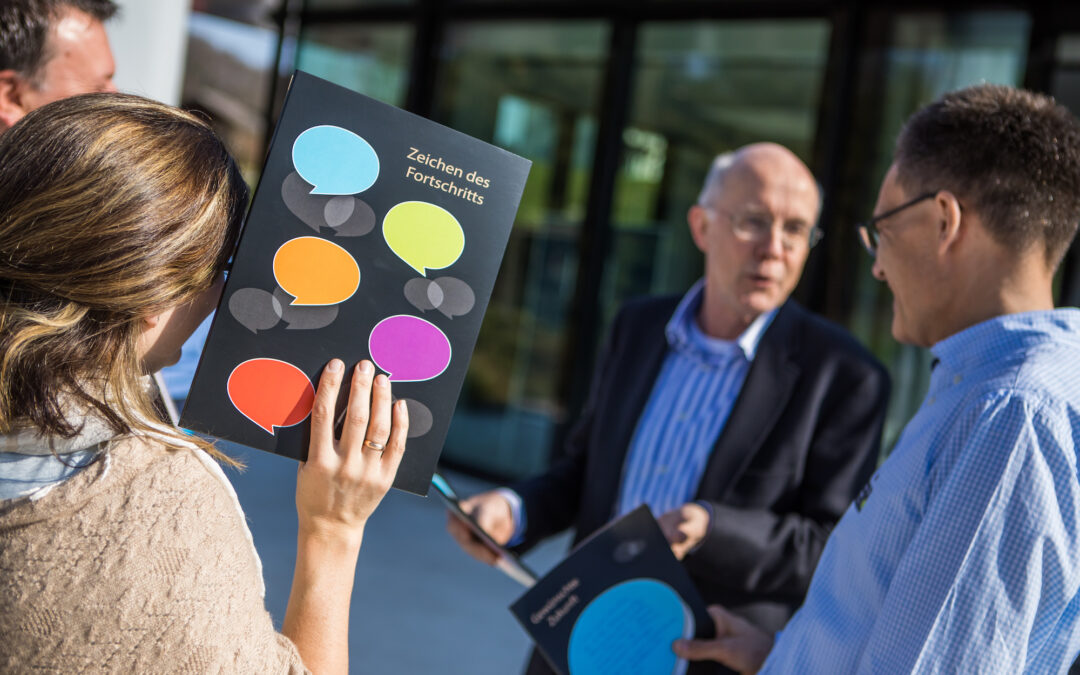
Photo taken at the 2nd Conference for Solution Focused Leadership hosted by Elfie & Dominik in 2017 in Lucerne – participants co-constructing hope in conversations.

Co-Constructing Hope in Conversations

The article “Co-Constructing Hope in Conversations” first appeared in our monthly magazine Persönlichkeit – Schritt für Schritt entwickeln und entfalten, by WEKA Business Media AG. Special thanks to Heather Fiske for her support in editing the revised English version.

We can co-construct hope in conversations moment-by-moment. How? With deliberate questions and formulations.

Hope strengthens. Hope empowers action. Hope is vital. And we can encourage hope. How? By having deliberate conversations. We have conversations every day. We have all learned to converse from an early age. And we have heard a lot about communication in our professional training. But how do we actually co-construct meaning in conversations? More deliberate communication is the key. 

New methods in communication research

In recent years, the research group around Janet Bavelas, a renowned Canadian communication researcher, has developed microanalysis of face-to-face dialogue. With this video-based research method, what actually happens in conversation becomes visible. Among other things Bavelas et al. can show in detail how participants in a conversation create meaning together. We call this process co-constructing: Meaning is made together (co-) and from different elements (i.e. constructed) in a conversation.

Constructing meaning with questions

Consider this question: «What keeps you even a little bit hopeful, in spite of everything?» What answers might you give, if we were in a conversation with each other? Let’s say you reply with: «my friends still care about me». With our question and your answer, we have established the following meaning in our conversation: What keeps you even a little bit hopeful, in spite of everything, is that your friends still care about you.

If we look at the jointly constructed meaning «What keeps you even a little bit hopeful, in spite of everything is that your friends still care about you.», we find that the meaning derives from the content of both the question (What keeps you even a little bit hopeful…?) and the answer (My friends still care about me). Without both question and answer, the shared meaning would not exist.

By asking questions we can purposefully lead conversations, for two reasons. First, most questions will be answered by our conversation partner. Second, with questions you substantially influence the direction of the conversation.

By asking questions we do two things:

  1. Introduce concepts that shape the direction and content of the conversation. In this example, the assumption that there are things that keep you hopeful.
  2. Limit the range of possible answers. We call the limited range of answers that can fit as replies to a particular question the response spectrum.

Hopeful concepts

In the example above, we have asked what keeps you hopeful. We could also have introduced other concepts, for example what is difficult for you right now, what drains your motivation, or what leads to despair. Not only would our conversation have taken a different direction, but we would also have co-constructed a less hopeful meaning.

To co-construct hope in conversations, introduce hope-friendly ideas in your questions.

Co-creating together

This difference between a view of communication as an alternating sending and receiving, and a view of communication as something we do together moment by moment, may seem trivial at first glance. However, this difference has potentially world-changing implications.

While the traditional view of communication focuses on sending and/or receiving, this new view raises the question of how we interact together. Imagine the differences it would make if everyone realized that they, as conversation partners, are always jointly responsible for what happens; that they influence conversations just as much as their conversation partners; and that this responsibility and influence exists even if they are “only” listening.

In this view of communication, the result of a conversation can no longer be assigned to just one person but is always jointly created. Statements like “My employees only talk about problems.” or “He talked all the time.” would change to “How can we interact more usefully together?” We cannot blame one conversation partner for either the content or the course of the conversation: Both parties are always involved.


Examples of hope-friendly concepts:

Hope itself:
What are your best hopes?
What are you hoping for?
What gives you hope?
What strengthens your hope?
Supposing you have one tiny molecule of hope—what is it?

The hoped-for future:
Suppose things start to improve, even just a little…
What would you like?
What do you want?
What do you wish for?
What is your goal?
How should the future look from your point of view?

What is working:
What is already going in the right direction?
What’s already on track?
What’s working well?
What are you doing well?

What worked in the past:
What helped you in difficult times in the past?
When was a time when it was (at least a little) better? What did you do differently then?
How did you cope in the past?

Resources:
What helps you in difficult times?
What supports you in times like these?
What could support you?
Who could support you?

Progress:
What could be a good next step?
How could you notice progress?
What is already better than before?
What points in a good direction?

Own contributions:
What have you already contributed?
What else could you do to move a step further?

Possibilities:
What possibilities do you see?
How could this succeed?
How could this work out ok?

Confidence:
What gives you confidence?
How else could your confidence increase?
How might you notice that your confidence has further increased?

Inviting hopeful responses

What answers do your questions allow? The answers we receive to our questions are substantially influenced by the response spectrum, the range of possible responses that our questions allow.

Let’s compare the following two questions:

  1. Does anything give you hope?
  2. What gives you hope?

While both questions include the concept of hope, they differ significantly in the answers they invite.

Width of the response spectrum: The first question can be answered with «yes» or «no». It therefore offers a small response spectrum with only two possible answers. For the second question the range of responses is much broader and covers many different possible answers. We could narrow the response spectrum of the second question by asking, for example, «What has given you hope lately?». Now the person answering that question has to choose, from all that gives them hope, only those elements that have given them hope lately. We could also enlarge the response spectrum, for example by asking «What could give you hope?» Now the person is invited to name everything that could ever possibly give them hope.

Exclusion of certain answers: Imagine you want to lead a hopeful conversation. You ask the first question «Does anything give you hope?» and your conversation partner answers with «no». In your shared understanding you now have established that nothing gives them hope. If you had asked the second question «What gives you hope?» the answer «no» is very unlikely, and it would hardly count as an answer to your question. Because the response spectrum is wider, your conversation partner would be prompted to find something, and it’s much more likely that they find something that gives them at least a little bit hope.

A hopeful response spectrum facilitates hope!

Ask specific questions that have a wide response spectrum and that invite only hopeful answers:

  • «What gives you hope» instead of «Does anything give you hope?»
  • «What gives you hope» instead of «What takes away your hope?»
  • «What makes you confident?» instead of «Does something make you feel confident?»
  • «What have you already contributed to this?» instead of «What are you unable to do?»

    Reacting with deliberate formulations

    In addition to questions, formulations play an important role in deliberate conversations. A formulation is a literal representation of (part of) what the other person has said. A formulation can be a comment on something that’s been said, a summary in your own words or a repetition of the other person’s words.

    If in response to «What keeps you even a little bit hopeful, in spite of everything?» the person answers, «that my friends still care about me», we could for example answer with “oh, I see, having friends who care helps you to keep hopeful”. Formulations are never neutral. They influence the conversation and the meanings that emerge in conversations, similar to questions. If the person agrees to our formulation, with the question, the answer, and the formulation we co-constructed the meaning that having friends who care helps you to keep hopeful.

    When you are reacting with formulations to what has been said, you change the content. In other words: With your comments you create a new meaning. 

    You can

    • omit (in our formulation above «still» was omitted),
    • preserve exactly (the word «friends, care» were kept),
    • preserve in altered form («My friends care» was changed to «having friends who care»)
    • add («Oh I see,» and «helps you» was added)

     This way «that my friends still care about me» has been changed to «Oh, I see, having friends who care helps you to keep hopeful». With that the new meaning, that having friends who care helps you to keep hopeful.”, was co-constructed.

    Choose your formulations wisely!

    • Listen to what the other person says and catch hope-friendly elements that you can build your next formulation or question on.
    • Leave elements of what is said out if they are not hopeful. «Still», which might suggest that eventually the friends would stop caring, was omitted in favour of the idea of «friends who care».
    • Keep elements that give hope exactly or in an altered more hopeful way. Keep the «friends» and «care» in your formulation. Alter the “friends who (…) care” to “having friends who care”.
    • Add items that could give hope. For example, «It’s great, that you have caring friends. What do you see that tells you that they care?»

    Choose your contributions to the conversation – your questions and formulations – carefully. By doing so, you participate in a more hopeful co-construction; your questions and formulations will highlight and reinforce the other person’s hope. 


    Further training on the topic

    Join our Microanalysis online course and get to know what really happens in dialogue:

    Listen to our podcast conversation with Janet Beavin Bavelas at Czerny, Elfie J./Godat, Dominik (2018). SFP 10 – Episode 10: Seeing Interaction: Interview with Janet Beavin Bavelas. https://www.sfontour.com/project/sfp-10-seeing-interaction-interview-with-janet-beavin-bavelas/

    The Authors

    This article was written by Elfie Czerny and Dominik Godat, communication and leadership experts, Interactionalists, and promoters of solution-focused practices. They are co-editors of the magazine Persönlichkeit! and co-founders of SF on Tour. Learn more at www.sfontour.com

    SF Inspiration #11: The big misunderstanding: Not everything is communication!

    SF Inspiration #11: The big misunderstanding: Not everything is communication!


    SF Inspiration #11: The Big Misunderstanding: Not Everything Is Communication!

    by Dominik Godat & Elfie J. Czerny

    Photo taken by Klaus Schenk at the SOL World Conference 2019 in Budapest.

    The big misunderstanding: Not everything is communication!

    This article “The big misunderstanding: Not everything is communication!” was originally published in German on the Leadership Network Lucerne Blog of the University of Applied Sciences Lucerne. With big thanks to Heather Fiske for her support in editing the English version of the text.

    Do you practice reading body language? Do you see hidden messages in how your conversation partner sits or moves? Then you have probably fallen into one of the most common misunderstandings about communication: that all human behaviour is communication that can be interpreted and understood. It may be true that it is impossible not to communicate anything in an interactive setting. However, not all behavior is communicative or meaningful.
    There are innumerable books on body language. Most postulate that certain poses, certain postures, certain body reactions have specific meanings, regardless of a person’s words. The non-verbal and the verbal are described as separate channels with separate, often different meanings. Although this position is ubiquitous, it is not empirically tenable, and is based on a misunderstanding that has lasted half a century.

    You cannot not communicate

    Every student of communication knows the five axioms of communication formulated by Paul Watzlawick, Janet Beavin (now Bavelas) and Don D. Jackson in 1967 [1]. These axioms have shaped the way we talk about communication for 50 years, even though Watzlawick, Beavin, and Jackson saw them as tentative or provisional hypotheses only. In the authors’ view, the five axioms were neither complete nor final [2] and required empirical verification [3]. Despite their unproven status, the axioms have been accepted as facts. This misunderstanding has been especially prevalent for axiom 1, “You cannot not communicate”.

    Axiom 1 consists of two hypotheses:

    1. All behavior in an interpersonal situation has message value, i.e., is communication.
    2. Thus, one cannot not communicate.

    Part 1 in particular has generated intensive focus on body language, with the following flawed conclusion: Since one cannot not communicate, every body reaction is communication and has to mean something. Thus, it is important to know and interpret these meanings.

    Two different logical arguments

    This hype around body language still persists, although the conclusion is based on two logically different statements and is empirically untenable.

    Janet Bavelas [4] herself points out that her two hypotheses make two different logical arguments. “Every behavior is communication” is a universal statement that assumes communicative properties for every behavior, while “one cannot not communicate” simply states that in the presence of other people some behavior must be communicative.

    This means that if the first statement is true, the second statement must also be true. If all behavior is communication, then it is also true that one cannot not communicate. However, if the first statement is false and not all behavior is communication, then the second statement can still be true. Even if not all behavior is communication, it can still be the case that one cannot avoid communicating something in the presence of others.

    Or the other way round: Even if “you cannot not communicate”, not all behavior has to be communication.

    Nonverbal behavior and nonverbal communication

    Wiener et al. made the distinction between non-verbal behavior and non-verbal communication as early as 1972 [5]. They saw non-verbal communication as a sub-group of non-verbal behavior.

    They distinguished between two different forms of non-verbal behavior:

    • Communicative behavior: Behavior with which the person intends to communicate something and to which the other person reacts.
    • Informative behavior: Behavior by which the person doesn’t intend to communicate something and that is only interpreted as communication by the person observing the behavior.

    Informative behavior is behavior of one person, interpreted by another one. The interpretation of the behavior depends heavily on the ideas of the interpreter. Since it takes place primarily “in the head” of the person interpreting and not as an interaction between people, it cannot be empirically researched through observation. Informative behavior is not considered to be interactive and is seen as non-verbal behavior, but not as non-verbal communication.

    Communicative behavior, on the other hand, is interactive and can be seen as an exchange between people in conversation. Since communicative behavior takes place “between people” – one person intends to communicate something, and the second person relates to the behavior of the first person – it can be observed empirically and is seen as non-verbal communication.

    Not all behavior is communicative

    The above distinction results in three non-verbal behaviors:

    1. Non-informative, non-communicative behavior (non-verbal behavior): behavior by which nothing is meant to be communicated and that is not interpreted by the other person (e.g. moving the little toe or stretching out the fingers of a hand that is on the table.).
    2. Informative behavior (non-verbal behavior): behavior by which nothing is meant to be communicated but that is interpreted by the other person (e.g. the visible scratching of a mosquito bite with the interpretation by the other person that the bite is itching).
    3. Communicative behavior (non-verbal communication): behavior by which the person intends to communicate something (e.g., signaling a telephone receiver with the right hand while saying, “I spoke to my mother yesterday”) and to which the other person responds (e.g. with a listener’s response like “Ah, so” or “Mhmm” or with a comment or a question afterwards).

    So not all behavior is communicative and certainly not all behavior is meaningful. The first kind of non-verbal behavior (non-informative, non-communicative) isn’t meaningful to either person. The second type (informative behavior) has a meaning for the interpreter. However, informative behavior does not necessarily have to have the same meaning (or indeed, any meaning)  for the other person. Only the third type of non-verbal behavior (communicative behavior) is communicative.

    Bavelas and Chovil [6] specify that non-verbal communicative behavior takes place only in the presence of other people (to communicate something), but not when the person is alone. For example, researchers were able to show that people who bite into a salty sandwich show the facial expression of “disgust” when other people are present [7].

    It has long been clear in research circles that the 1967 hypothesis that all behavior is communication, is wrong. Yet the idea persists in the general public. In the words of Janet Bavelas: “As for ‘all behavior is communication’, I thought that this error was only in the literature for five years before being corrected by Wiener et. al (1972).” [8]

    Can’t you not not communicate?

    Does this mean that axiom 1, “One cannot not communicate”, is wrong? No, not necessarily. Even if the derivation of the axiom has been refuted and not all behavior is communication, it can still be the case that certain behavior must be communicative in the presence of others.

    Current microanalysis studies show that communicative behaviors (e.g. nodding, gaze, facial gestures, words) occur continuously in human interactions [9]. Even if there is no verbal interaction, it seems impossible not to communicate anything. The presence of other people seems to make it necessary to communicate at least personal availability or unavailability for communication. In situations in which people want to avoid communication, for example, they often quickly look away when eye contact occurs, communicating that they are not available for further interaction. “You cannot not communicate” is thus a hypothesis that can and should be tested empirically.

    How should I deal with non-verbal behavior that I cannot interpret?

    Even if many books on body language propagate the idea, not all behavior is communicative and not all behavior is meaningful. Some might say “Still, it makes sense to at least interpret informative or communicative behavior.”

    From our point of view, this usually makes little sense. On the one hand, it is often clear what the behavior of the other person shows. If the other person scratches their arm after a mosquito bite or sips their coffee and smiles, no further interpretation is required.

    Interpretations are highly dependent on the person making them and have often nothing to do with the other person’s experience. People are different and often react differently. Although books about body language try to tell a different story, they don’t build on scientifically proven findings that show that behavior in general – that is, regardless of individual characteristics and the current interaction – has a meaning. Still, many writers promote this fallacy without a scientific base. An example is the idea that “If someone crosses their arms, it means that the person is rejecting you or your idea”. However, the person may just be cold, or more comfortable with crossed arms, or easing a sore back. If each behavior has a generic, person-independent meaning, then this would mean that all humans generally behave in the same way. Instead, we see every day that this is not the case.

    Therefore, instead of interpreting, it is worth asking the other person about their behaviour. The only person who can possibly know if their non-verbal behavior might mean something is the person you’re talking to.

    Further training on the topic

    Join our Microanalysis online course and get to know what really happens in dialogue:

    [1] Watzlawick, Paul/Beavin, Janet H./Jackson, Don D. (1967). Pragmatics of Human Communication: A Study of Interactional Patterns, Pathologies, and Paradoxes. New York: W.W. Norton & Company.
    [2] Watzlawick, Paul/Beavin, Janet H./Jackson, Don D. (1967). Pragmatics of Human Communication: A Study of Interactional Patterns, Pathologies, and Paradoxes. New York: W.W. Norton & Company, p. 48.
    [3] Bavelas, Janet B. (1990). Forum: Can One Not Communicate? Behaving and Communicating: A Reply to Motley. Western Journal of Speech Communication, 54 (Fall 1990), p. 593-602.
    [4] Bavelas, Janet B. (1990). Forum: Can One Not Communicate? Behaving and Communicating: A Reply to Motley. Western Journal of Speech Communication, 54 (Fall 1990), p. 593-602.
    [5] Wiener, Morton/Devoe, Shannan/Rubinow, Stuart/Geller, Jesse (1972). Nonverbal behavior and nonverbal communication. Psychological Review, 79(3), p. 185–214.
    [6] Bavelas, Janet B. (1990). Forum: Can One Not Communicate? Behaving and Communicating: A Reply to Motley. Western Journal of Speech Communication, 54 (Fall 1990), p. 596.
    [7] Brightman, Vernon/Segal, Arthur/Werther, Patti/Steiner, Jacob (1975). Ethological study of facial expression in response to taste stimuli. Journal of Dental Research, 54, L141.
    [8] Bavelas, Janet B. (1990). Forum: Can One Not Communicate? Behaving and Communicating: A Reply to Motley. Western Journal of Speech Communication, 54 (Fall 1990), p. 599.
    [9] Bavelas, Janet/Gerwing, Jennifer/Healing, Sara (2017). Doing mutual understanding. Calibrating with micro-sequences in face-to-face dialogue. Journal of Pragmatics 121 (2017), p. 91-112.

    The Authors

    This article was written by Elfie Czerny and Dominik Godat, communication and leadership experts, Interactionalists, and promoters of solution-focused practices. They are co-editors of the magazine Persönlichkeit! and co-founders of SF on Tour. Learn more at www.sfontour.com

    Pin It on Pinterest